The short version
Survival Log rewards foresight. You have limited time, money, carrying capacity and shelf life before the city collapses. A good opening is therefore a balanced plan: enough essentials to survive the first pressure spike, enough storage to keep them usable, and enough defensive capacity to buy time.
A first-run plan that teaches the whole game
1. Read the character and safehouse first
The official release has three characters, each with a different ability profile, dedicated home and branching story. Walk through the available rooms and fixed furniture before shopping. A large appliance is not useful if you have no valid slot or no power budget for it.
2. Buy by system, not by item count
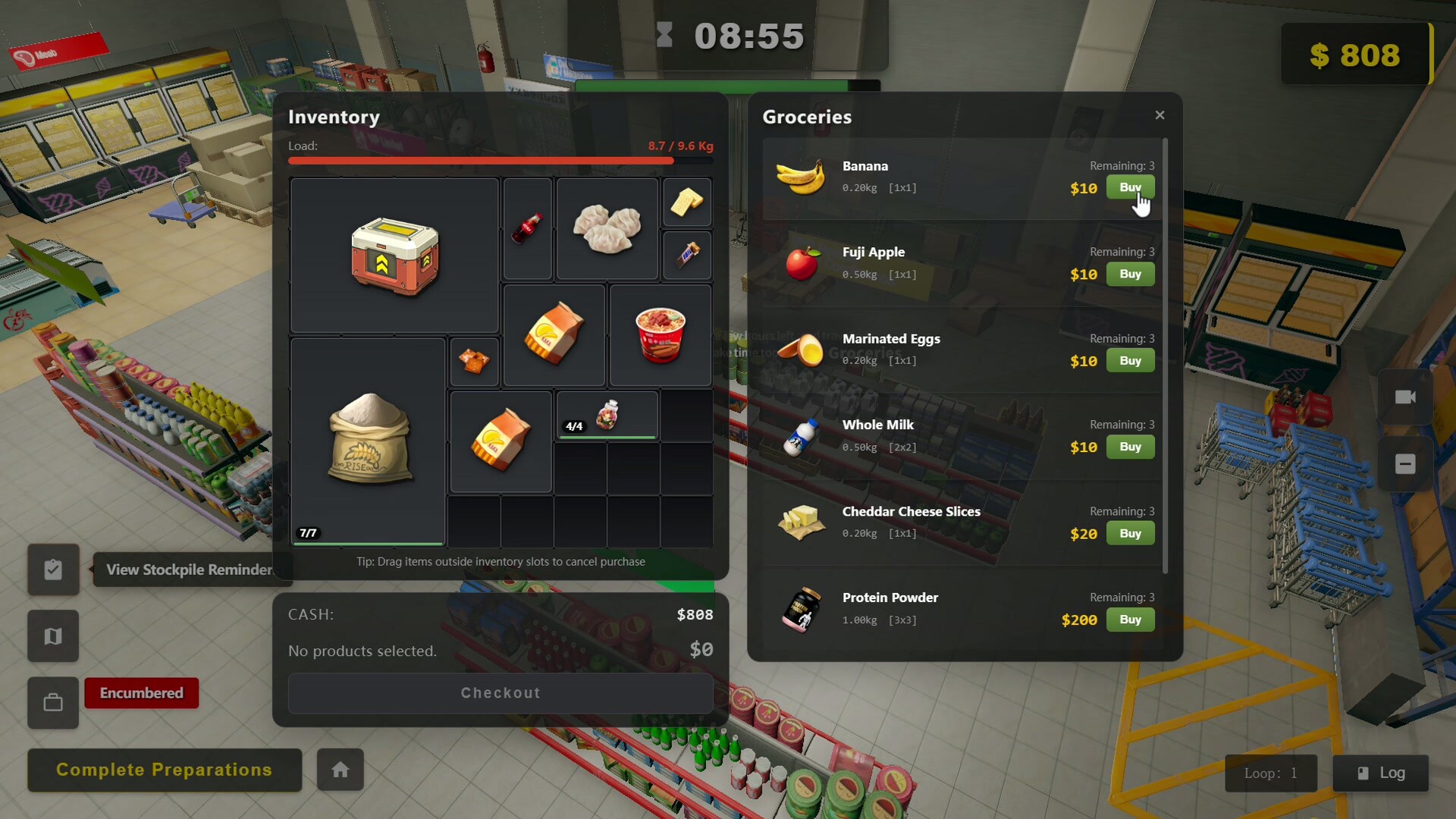
Open the Stockpile Checklist and look for weak dimensions. Cover immediate food and water, basic medical recovery, storage, door and window resilience, and at least one practical way to keep essential appliances running. The game balances price, weight and shelf life for its own loop, so real-world hoarding advice is not a valid shopping list.
3. Establish a daily rhythm after the outbreak
Queue urgent needs first. Keep enough stamina to repair, cook or react to a crisis. Turn raw supplies into longer-lasting routines: refrigeration, farming, cooking and reliable power. Explore only when the expected reward is more valuable than the time, exposure and carrying capacity you spend.
4. Treat failure as information
The log and Planning Points make later loops stronger. Note which shortage ended the run: calories, morale, power, defense, medicine or time. Fix that bottleneck next time instead of copying a giant shopping list.
Common beginner mistakes
- Buying too much of one category while ignoring storage or power.
- Filling the backpack so completely that the last urgent purchase cannot fit.
- Expanding the safehouse before keeping a clear repair path to doors and windows.
- Exploring with low stamina or no space for the item you actually need.
- Assuming an old demo guide still matches the August 2026 release.